What is molecular imaging, and how does it help people with prostate cancer?
Molecular imaging is a type of medical imaging that provides detailed pictures of what is happening inside the body at the molecular and cellular levels. Where conventional imaging methods such as x-ray (radiographs), computed tomography (CT), magnetic resonance imaging (MRI), and ultrasound (US) predominantly offer anatomical pictures, molecular imaging allows physicians to see how the body functions and measures its chemical and biological processes.
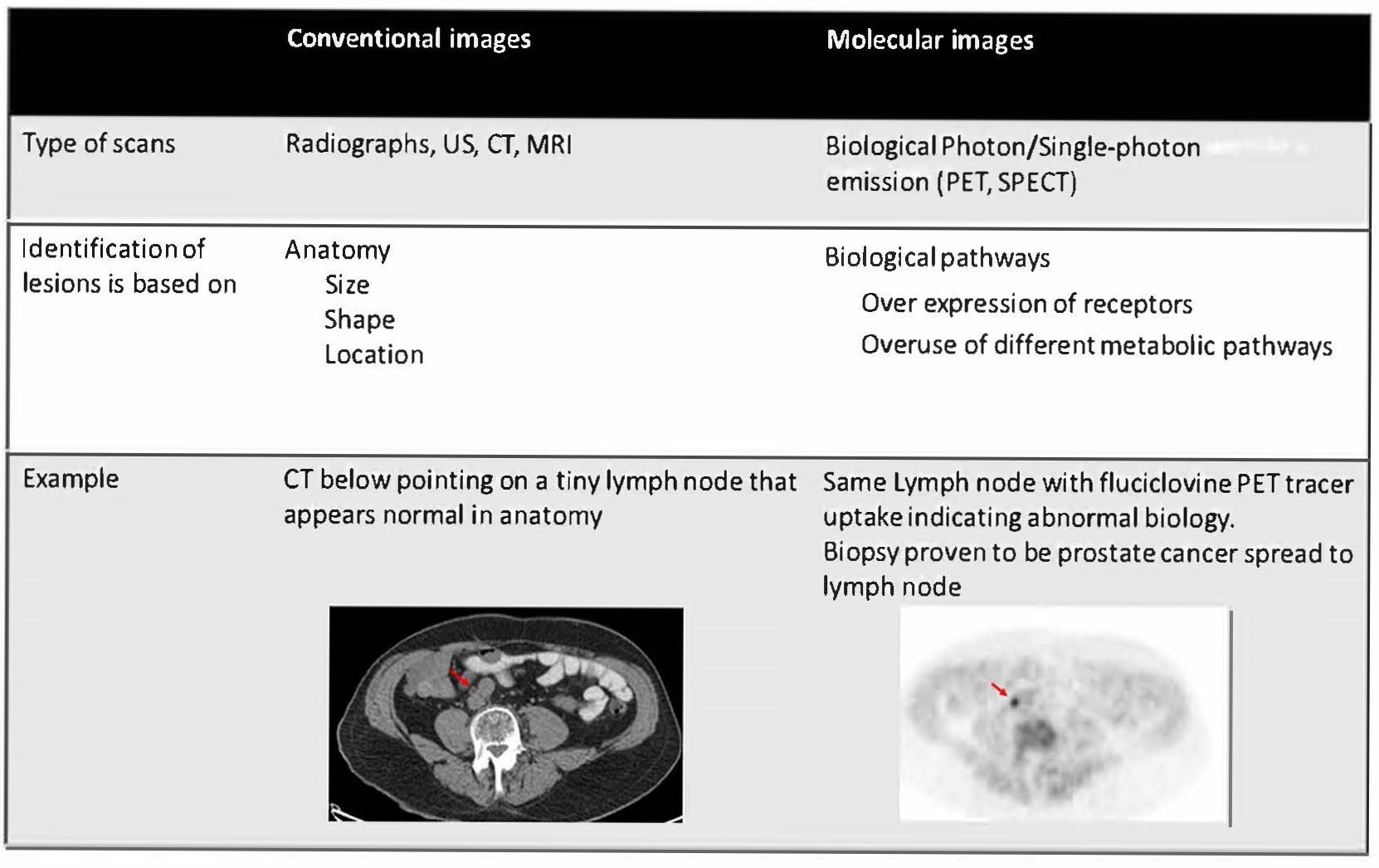
Molecular imaging can also use both morphologic and physiologic in a “Hybrid” image.
By superimposing the precise location of abnormal metabolic activity (from PET) in a tissue or an organ against the detailed anatomic image (from CT or MRI) we can get information from two different types of scans in a single set of images.
The image below is a PET/MRI. The arrow is indicating a bone metastasis in the left inferior public ramus.
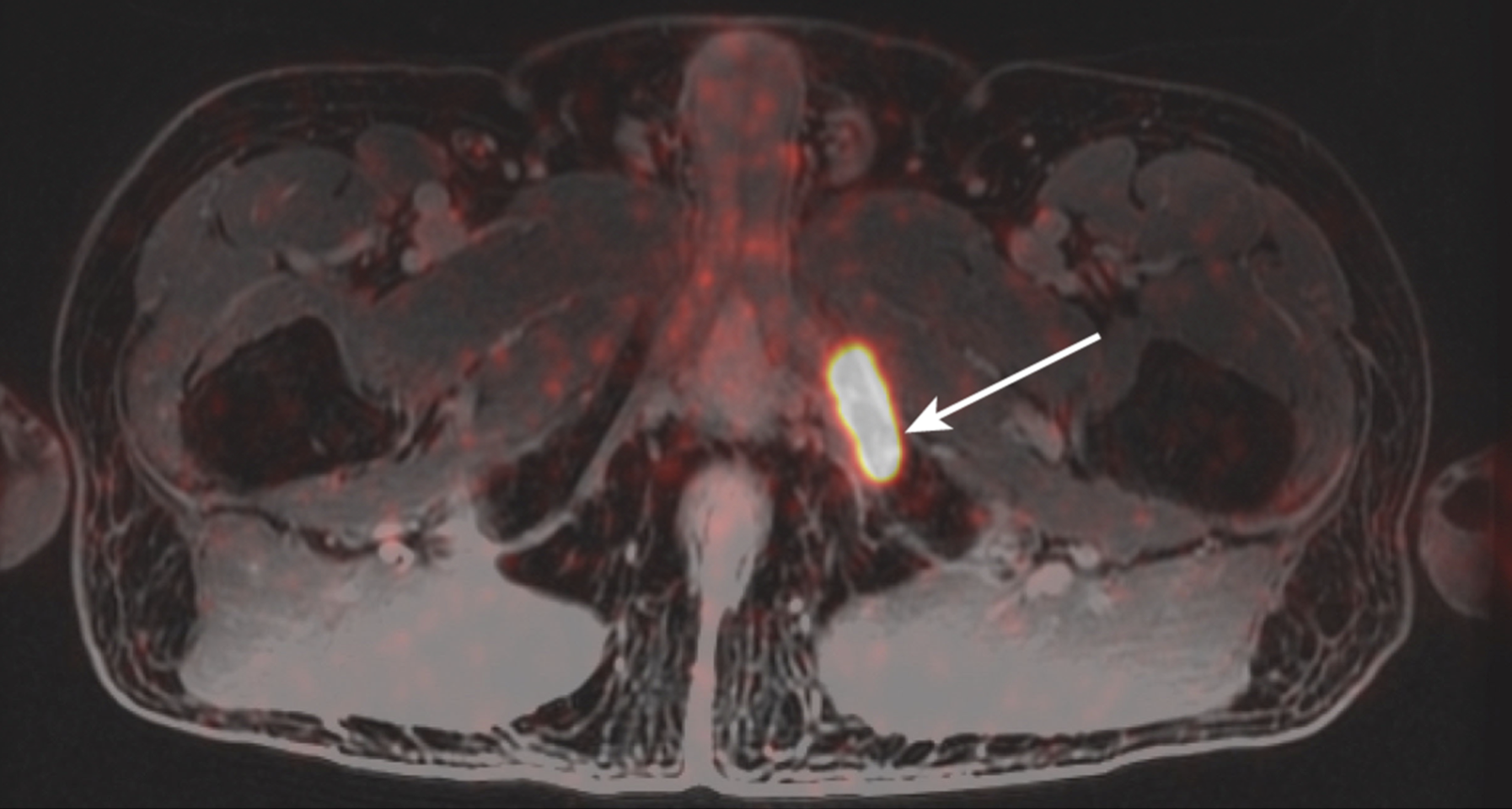
Journal of Nuclear Medicine, April 2020
Molecular imaging offers unique insights into the human body that enable physicians to personalize patient care.
Overall molecular imaging is able to:
- Provide information that is unattainable with other imaging technologies or that would require more invasive procedures such as biopsy or surgery
- Identify disease in its earliest stages and determine the exact location of a tumor, often before symptoms occur or abnormalities can be detected with other diagnostic tests
As a tool for evaluating and managing the care of patients, molecular imaging studies help physicians:
- Provide early localization of primary and recurrent disease before it is seen in conventional images (such as US, CT, MRI).
- Determine the extent or severity of the disease, including whether it has spread elsewhere in the body
- Personalize therapy based on the unique biologic characteristics of the patient and the molecular properties of a tumor or other disease
- Determine a patients’ response to specific drugs and accurately assess the effectiveness of a treatment regimen and adjust treatment plans quickly in response to changes in cellular activity
- Assess disease progression
- Identify recurrence of disease and help manage ongoing care
- Determine appropriateness or eligibility for new therapies
Nuclear medicine molecular imaging procedures involve the use of radiation in small amounts that are relatively non-invasive, safe, and painless. Consult with your health provider for specific information on the safety and benefits of molecular imaging for your care.
More information about nuclear medicine and radiation can be found in our Factsheet:
Nuclear Medicine and Radiation Safety